A Concept of Operations for Achieving a Navy Fleet of 500 Ships

The U. S. Navy stands at the precipice of a new era of technology advancement. In an address at a military-industry conference, the then-U.S. Chief of Naval Operations, Admiral Michael Gilday, revealed the Navy’s goal to grow to 500 ships, to include 350 crewed ships and 150 uncrewed maritime vessels.

MARTAC Unmanned Surface Vessels are a Key Enabler for a Philippines’ Porcupine Defense Strategy of their Archipelago

A Porcupine Defense Strategy relying on MARTAC’s Maritime Autonomous Systems (MAS) are of critical importance in the Taiwan-Philippines-Japan Strategic Triangle
for regional security and global trade.

Melbourne, FL— On 8/5/2025, Maritime Tactical Systems, Inc. (MARTAC), an innovator in Unmanned Surface Vessels (USVs), is proud to see its leading unmanned surface vessels (USVs) part of the Philippines’ evolving maritime defense strategy.  Robbin Laird, a noted naval strategist, has referred to this evolving strategy as the “porcupine defense”.  The porcupine defense is focused on distributing assets and leveraging AI technology and networks to create multiple defensive points to alter the calculus of naval engagement and provide an effective deterrent across the region.
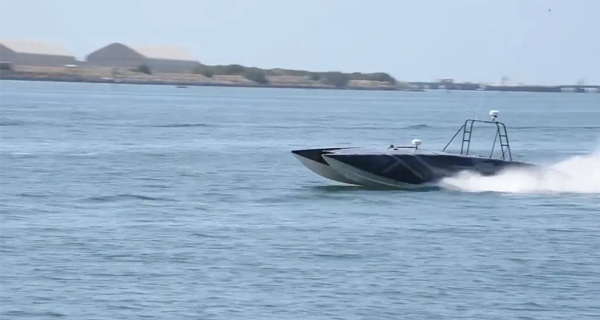
As detailed in a newly published article, “US-Philippines Military Cooperation: Fast Boat Bases and Unmanned Systems Contribute to South China Sea Strategy”, the Armed Forces of the Philippines is deploying a network of Maritime Autonomous Systems (MAS) including MARTACs Devil Ray T38 (T38), to create a persistent, distributed maritime presence across its 7,000-island archipelago.  Deploying a high-performance, AI-driven MARTAC USV Fleet is a cost-effective force multiplier that complicates adversary targeting and allows for rapid response to maritime threats over their expansive archipelago.

“At the heart of the porcupine defense is the ability to project speed, endurance, and ISR from multiple axis points simultaneously,” said Bruce Hanson, CEO of MARTAC. “Our USVs provide the Philippines with an unmatched combination of speed, autonomy, and mission flexibility—all at a fraction of the cost of manned systems.”

Benefits of Distributed Maritime Defense

MARTACs Devil Ray T38 is ideally suited for this mission:

• High-Speed Maneuverability: Reaches speeds exceeding 60 knots, allowing for rapid deployment and repositioning across the archipelago.

• Modular Mission Payloads: Up to 4,000 lbs. (1.815 kgs) of payload capacity supporting ISR, electronic warfare, counter UAS and anti-mine warfare missions.

• Persistent Autonomous System: MARTAC’s Systems operate in challenging environments with advanced AI-driven autonomy that integrates seamlessly with beyond-line-of-sight (BLOS) communications such as Starlink allowing for endurant fleet operations.

These capabilities align precisely with the needs outlined by Philippine and U.S. defense leaders, including Lt. Gen. “Stick” Rudder (USMC Ret.), who emphasized the importance of persistent unmanned systems to supplement limited naval capacity. Secretary Michael Wynne, former U.S. Air Force Secretary, further reinforced the need for “small, cheap, and independent” platforms to deliver credible deterrence in contested environments.

Task Force Ayungin & Operational Integration

MARTAC’s Systems are part of the evolving operational framework under Task Force Ayungin, which is charged with expanding Philippine USV operations while maintaining national sovereignty. With forward-positioned launch facilities in Palawan and Quezon Province, MARTAC vessels can be deployed in minutes to respond to threats in key areas such as Second Thomas Shoal.

“MARTAC systems were built for exactly these kinds of missions—agile, autonomous, and adaptable,” added Hanson. “This is a textbook application of our technology in support of an allied partner confronting gray-zone challenges.”

U.S. Partnership and Regional Impact

With support from the Maritime Security Consortium—a U.S. Indo-Pacific Command initiative providing US$95 million annually for rapid maritime capability delivery—MARTAC is helping deliver operational capabilities today, not decades from now.

The Philippines’ model is already drawing interest from other allies in the Indo-Pacific and beyond as they encounter similar maritime security concerns in a changing geopolitical environment.

To learn more about the Philippines’ Porcupine Strategy, you can download the report by clicking:

Shaping-a-Porcupine-Defense-Strategy-for-the-Phillipines-Print

Or you can listen to a podcast at:

Maritime Tactical Systems Inc. (MARTAC) is the worldwide leader in the development and manufacture of Unmanned Surface Vessel (USV) Solutions.  MARTAC has a proven track record with thousands of hours operating worldwide and is the solution to your maritime mission needs.

Op-Ed: The Department of Navy’s Science and Technology Board accelerates naval innovation

Much ink has been spilled regarding the U.S. Navy’s hybrid fleet, a concept first articulated by Chief of Naval Operations Adm. Michael Gilday and embraced by his successor, Adm. Lisa Franchetti. The basics of this initiative were described in the “Force Design 2045” which called for 350 crewed ships and 150 large uncrewed maritime vessels for the “Navy-After-Next.”

This innovative concept was born out of necessity. The concept of hybrid fleet evolved due the U.S. Navy’s ongoing challenge of building enough crewed ships to adequately meet the Navy’s global commitments. 

A recent report by the Department of the Navy Science and Technology Board entitled, “The Path Forward on Unmanned Systems,” promises to help accelerate the path to a hybrid fleet by offering a way forward to design, develop and field uncrewed systems, especially uncrewed maritime vessels.

Read the full article here

U.S.-Philippines Military Cooperation: Fast Boat Bases and Unmanned Systems Contribute to South China Sea Strategy

As tensions in the South China Sea reach new heights, the United States and Philippines are dramatically expanding their military cooperation through a combination of new infrastructure projects and cutting-edge unmanned systems.

The United States plans to fund and construct a facility capable of hosting watercraft and assault boats on the western coast of Palawan, strategically positioned to support Manila’s operations in the disputed South China Sea. The base, located in the municipality of Quezon just 160 miles east of the flashpoint Second Thomas Shoal, represents a significant escalation in U.S.-Philippine military cooperation.

The facility is designed to support at least five vessels, including rigid-hulled inflatable boats (RHIBs) and assault boats manufactured by Oregon-based Reconcraft, a company specializing in military and law enforcement small boats. The strategic positioning allows for rapid deployment, with plans requiring watercraft to be launched within 15 minutes to meet “rapid deployment readiness” objectives.

This development is crucial for the Armed Forces of the Philippines, which has predominantly relied on Naval Detachment Oyster Bay to stage patrols and resupply missions to scattered outposts in the disputed waters. The new western coast facility will provide faster access to Manila’s Spratly Islands outposts compared to more developed eastern ports.

Read the full article here

Science and Technology Board propels US Navy towards a hybrid fleet

The navy-after-next will be a ‘hybrid fleet.’ This concept was first articulated by then-Chief of Naval Operations (CNO) Admiral Michael Gilday and embraced by his successor, Admiral Lisa Franchetti. The basics of this initiative are described in the CNO Force Design 2045, which calls for 350 crewed ships and 150 large uncrewed maritime vessels.

This innovative concept was born out of necessity. The concept of the hybrid fleet evolved due to the US Navy’s ongoing challenge of building enough crewed ships to adequately meet its global commitments. The CNO Navigation Plan for America’s Warfighting Navy states: “We cannot manifest a bigger traditional Navy in a few short years.” Indeed, the price of a US Navy Arleigh Burke-class destroyer has risen to US$2.2B.

The rapid growth of the technologies that make uncrewed surface vehicles (USVs) increasingly capable and affordable has provided the Navy with an opportunity to get more hulls in the water. To support these goals regarding large numbers of uncrewed maritime platforms, the US Navy established an uncrewed task force to provide stewardship for Navy-wide efforts to accelerate the introduction of uncrewed systems into existing Navy missions.

Read the full article here

The Navy’s Science and Technology Board Fast-Tracks the Journey to Achieve a “Hybrid Fleet”

The U.S. Navy is committed to fielding a “Hybrid Fleet.” This concept was first articulated by then-CNO Admiral Michael Gilday and embraced by his successor, Admiral Lisa Franchetti. The Hybrid Fleet initiative was described in the Chief of Naval Operations Force Design 2045 which called for 350 crewed ships and 1 50 large uncrewed maritime vessels.

The concept of Hybrid Fleet evolved due the U.S. Navy’s ongoing challenge of building enough crewed ships to adequately meet the Navy’s global commitments. The Chief of Naval Operations Navigation Plan for America’s Warfighting Navy put it this way: “We cannot manifest a bigger traditional Navy in a few short years.”

A recent report by the Department of the Navy Science and Technology Board entitled The Path Forward on Unmanned Systems, seeks to accelerate the goal of achieving a Hybrid Fleet by offering a path forward to design, develop and field uncrewed systems – especially uncrewed maritime systems – in order to achieve the Navigation Plan’s goal of: “Scaling robotic and autonomous systems to integrate more platforms at speed.”

Read the full article on page 7 here

NATO tests unmanned surface vessels in the Baltic Sea

NATO’s standing naval forces will conduct a series of capability demonstrations of uncrewed vessels in the Baltic Sea throughout the month of June to advance the integration of these vessels into Allied maritime operations.

NATO press release

These demonstrations are an operational lead-up activity to NATO’s Dynamic Messenger innovation exercise scheduled this autumn in Portugal and are also part of NATO’s Task Force X innovation initiative. The capability demonstrations are a partnered initiative between NATO’s Allied Command Transformation (ACT), Allied Maritime Command (MARCOM), the Centre for Maritime Research and Experimentation (CMRE) and participating Allied nations.

Experimentation activities will occur in various locations throughout the Baltic Sea and are designed to enable critical learning and insights about how these vessels are best employed in critical maritime environments.

We remain focused on testing the Alliance’s ability to trial and integrate uncrewed systems into a networked operational environment,

“We remain focused on testing the Alliance’s ability to trial and integrate uncrewed systems into a networked operational environment,” said Royal Navy Vice Admiral Mike Utley, Commander, Allied Maritime Command. “These trials are focused on operational output and enhancing the spiral development of both NATO’s innovation teams and the national initiatives of Allies. Our objective is to deliver unmanned systems to NATO’s Standing Naval Forces with speed and scale, in the most relevant operational environments, further building on the military advantage of the Alliance.”

Read the full article here

U.S. Special Forces Train with USVs in the Philippines

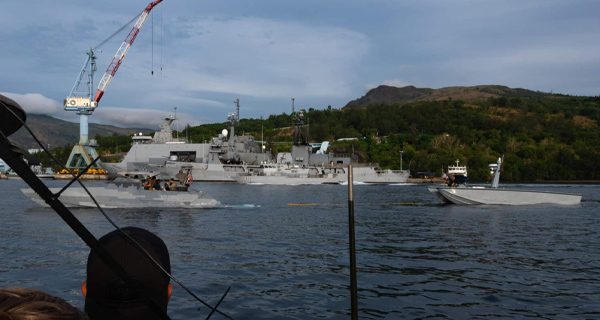
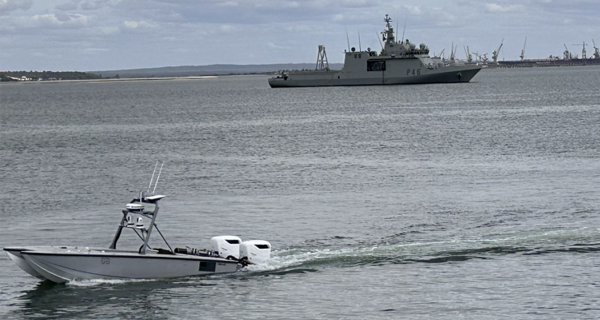
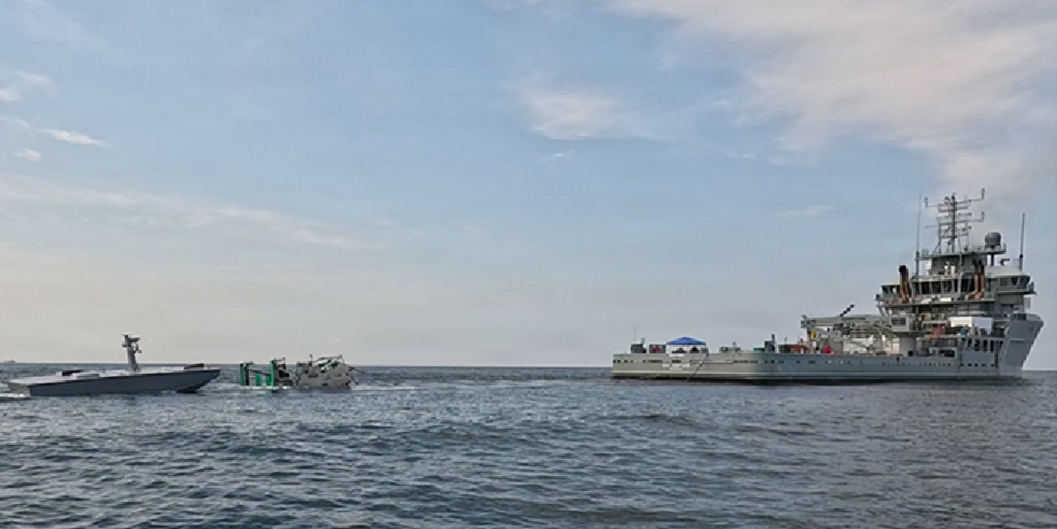
A photo released by the U.S. Air Force depicted the operation of a Maritime Tactical Systems Devil Ray T-38 unmanned surface vessel at Naval Operating Base Subic. A Naval Special Warfare Combatant Craft Assault towed the drone in front of Quay 7, which at the time hosted an Acero-class patrol gunboat, BRP Gregorio del Pilar-class (PS-15), and BRP Davao del Sur (LD 602).     

U.S. special operations forces have been training in the Philippines since early spring, bringing along with them their specialized aviation and fast boats. Their deployments across the country, including to the strategic island chain of Batanes near Taiwan and in the South China Sea, were highlighted by U.S. Secretary of Defense Pete Hegseth in Manila during his first visit to a partner in the Indo-Pacific region in March. 

The American defense secretary also highlighted the deployment of drones alongside the Navy-Marine Expeditionary Ship Interdiction Systems for Balikatan 2025, a bilateral exercise that focused on the defense of the Philippines and heavily prioritized activities in the South China Sea and the Luzon Strait. A readout of Hegseth’s joint statement in Manila detailed that the training on the unmanned anti-ship launchers and vessels would “increase the interoperability and operational readiness of U.S. and Philippine forces to leverage cutting-edge military capabilities in Indo-Pacific operational environments.” 

read the full article here