Tony Smeraglinolo

Tony Smeraglinolo has over 30 years of experience driving transformation and customer-centric growth strategies within the government services industry. Immediately prior to MARTAC, Mr. Smeraglinolo was President and Chief Executive Officer of Engility Corporation (NYSE: EGL), a $2.1B leading provider of best-in-class training capabilities, specialized technical consulting, program and business support services, engineering and technology lifecycle support, and supply chain and logistics management services. He assumed this role after leading the spin-off of Engility from L-3 in 2012. 

Mr. Smeraglinolo’s tenure at Engility was defined by shareholder value creation through strategic M&A and growth through relentless focus on the most complex customer problems. He diversified the company’s portfolio away from being 80% DoD-dependent, pivoting to a higher-end service model, new price-disruptive products, and leading the acquisitions of DRC and TASC. His strategy transformed Engility into a top five service company that derives greater than 50% of its business from Civil and INTEL markets, and drove a 66% growth in revenue and a 300% increase in share price. Under his leadership, Engility ranked 30th in Washington Technology’s Top 100 largest contractors in the government market place. He was awarded  Deal Maker of the Year by the Association for Corporate Growth (ACG) in 2014, named to The Washington 100 by Executive Mosaic, and received GovCon’s Executive of the Year for Companies greater than $300M. 

Prior to the spin-off, Mr. Smeraglinolo was the Executive Vice President of the $4 billion L-3 Services Group, and Acting President, Command & Control Systems and Software division, L-3 Services Group. He was responsible for driving the two year strategy leading to the spin-off of L-3’s six government services business units to form Engility in July 2012. 

Mr. Smeraglinolo began his career at Harris Corporation where he held roles of increasing responsibility across finance, program management, business development and operations during his 25 year career with the organization. Following Harris Corporation, he served as President of the L-3 Services Group’s Intelligence Solutions Division for three years before he was recruited to be President of the Global Stabilization and Development Solutions division for Dyncorp International. 

Mr. Smeraglinolo earned his Master of Business Administration in Finance from Florida Institute of Technology and his Bachelor’s degree in Business Management, with a minor in Accounting, from Fairfield University in Connecticut.

MARTAC T38 Unmanned Surface Vessel Executes 192-Hour Autonomous Mission 400 Nautical Miles Offshore  

Demonstration Sets New Benchmark for Persistent USV Operations, Directly Supporting Evolving U.S. Government Concepts for Maritime Defense and Deterrence 

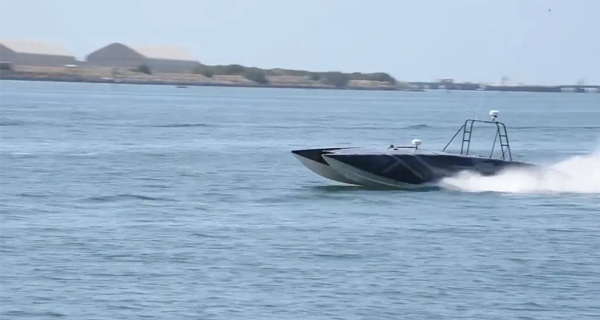
Melbourne, Florida, May 5, 2026 — Maritime Tactical Systems, Inc. (MARTAC) announced today that its T38 Devil Ray unmanned surface vessel (USV) has completed a record-setting 8-day, completely autonomous mission off the coast of California, demonstrating a level of endurance, reliability and operational control not previously achieved in its class. 

The USV, owned and operated by Naval Air Warfare Center Weapons Division’s (NAWCWD) Point Mugu Sea Range through its Future Capabilities Office’s Blue Water Instrumentation (BWI), successfully demonstrated extended autonomous operations in open-ocean conditions. This is critical to BWI’s goal of advancing the Navy’s ability to conduct test and evaluation programs in challenging maritime environments where traditional, fixed position instrumentation is unavailable. 

The demonstration highlighted the T38’s ability to operate autonomously for extended periods, maintain station in dynamic sea states, and support a range of mission profiles.  

Unique from scripted government sponsored events, no chase boats or escorts were involved in the operation that mirrored real-world operational requirements. The T38 safely navigated around multiple static and mobile contacts during the underway period, further demonstrating that its autonomy stack is compliant with the International Regulations for Preventing Collisions at Sea 1972 (COLREG). 

The mission emphasized persistence over speed, with the vessel averaging just over 4 knots per hour, validating its role as a long-endurance, forward-deployed asset capable of sustained presence rather than short-duration sprint operations. In short intervals where burst speed was required, the vessel demonstrated its trademark capability of 50+ knots per hour. 

A defining element of the mission was a deliberate two-day alternating single-engine operational period conducted approximately 400 nautical miles offshore. This was not a failure scenario; it was an intentional maneuver to extend loiter time and evaluate endurance under reduced propulsion conditions. During this period, the T38 autonomously maintained its designated station, continued data collection, and executed mission objectives without degradation, reinforcing the platform’s efficiency, control logic and mission flexibility. 

Sea conditions averaged Sea State 3, a slight sea condition with wave heights between 1.5 to 4 feet, with the vessel experiencing conditions up to Sea State 5 and wave heights reaching 10 feet, further stressing the platform across propulsion, autonomy and hull performance envelopes. 

Critically, performance in these conditions underscored the inherent stability advantages of the T38’s catamaran hull design. The twin engine, twin-hull configuration provides a wide beam and reduced roll, enabling the platform to remain steady in higher sea states. This stability directly translates to improved mission effectiveness, whether collecting high-fidelity sensor data, maintaining precise station-keeping or supporting targeting and firing solutions where platform stability is essential. 

The mission also validated extended range performance, confirming that the T38, when operating at 100% fuel capacity, is capable of exceeding 2,400 nautical miles of operational range under endurance-focused profiles. 

“This mission was designed to test more than endurance, it validated how the system performs when pushed into extended, efficiency-driven operations at distance,” said Karl Van Deusen, Senior Vice President for Federal and Government Sales. “Intentional single-engine operations at 400 nautical miles offshore, combined with continuous autonomy over eight days, demonstrate a level of operational control and flexibility that is directly aligned with real-world mission demands.” 

This milestone event establishes a new benchmark for persistent unmanned maritime operations, particularly in scenarios requiring extended loiter, distributed presence and reduced logistics dependency. The ability to sustain operations for over a week, and to intentionally modulate propulsion to extend mission duration, directly supports the emerging need for solutions in contested and remote maritime environments. 

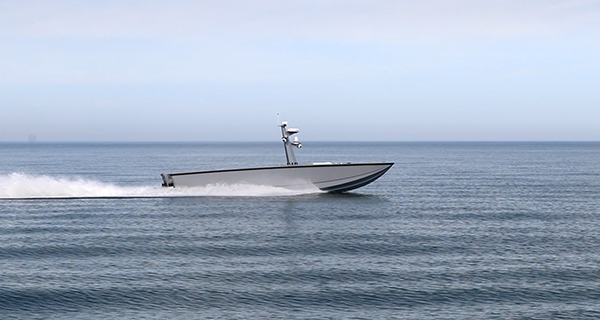
The carbon fiber T38 Devil Ray, a 38-foot autonomous surface vessel, is designed for intelligence, surveillance and reconnaissance (ISR), maritime domain awareness, logistics support and distributed fleet operations. Built on MARTAC’s open-architecture autonomy framework, the platform supports modular payloads and resilient communications, enabling mission execution in denied or degraded conditions. 

About Maritime Tactical Systems, Inc. (MARTAC) 
MARTAC is a global leader in unmanned surface vehicle (USV) technology, delivering high-performance, modular and operationally proven systems to defense and commercial customers worldwide. 

Media Contact: 

W2 Communications  

[email protected]  

A Concept of Operations for Achieving a Navy Fleet of 500 Ships

The U. S. Navy stands at the precipice of a new era of technology advancement. In an address at a military-industry conference, the then-U.S. Chief of Naval Operations, Admiral Michael Gilday, revealed the Navy’s goal to grow to 500 ships, to include 350 crewed ships and 150 uncrewed maritime vessels.

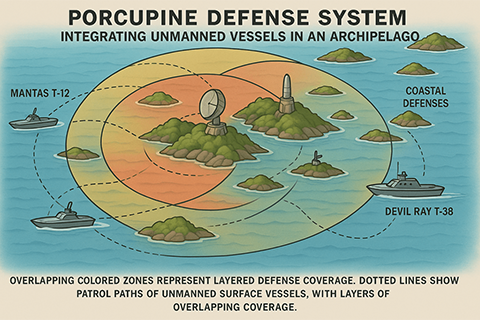
MARTAC Unmanned Surface Vessels are a Key Enabler for a Philippines’ Porcupine Defense Strategy of their Archipelago

A Porcupine Defense Strategy relying on MARTAC’s Maritime Autonomous Systems (MAS) are of critical importance in the Taiwan-Philippines-Japan Strategic Triangle
for regional security and global trade.

Melbourne, FL— On 8/5/2025, Maritime Tactical Systems, Inc. (MARTAC), an innovator in Unmanned Surface Vessels (USVs), is proud to see its leading unmanned surface vessels (USVs) part of the Philippines’ evolving maritime defense strategy.  Robbin Laird, a noted naval strategist, has referred to this evolving strategy as the “porcupine defense”.  The porcupine defense is focused on distributing assets and leveraging AI technology and networks to create multiple defensive points to alter the calculus of naval engagement and provide an effective deterrent across the region.

As detailed in a newly published article, “US-Philippines Military Cooperation: Fast Boat Bases and Unmanned Systems Contribute to South China Sea Strategy”, the Armed Forces of the Philippines is deploying a network of Maritime Autonomous Systems (MAS) including MARTACs Devil Ray T38 (T38), to create a persistent, distributed maritime presence across its 7,000-island archipelago.  Deploying a high-performance, AI-driven MARTAC USV Fleet is a cost-effective force multiplier that complicates adversary targeting and allows for rapid response to maritime threats over their expansive archipelago.

“At the heart of the porcupine defense is the ability to project speed, endurance, and ISR from multiple axis points simultaneously,” said Bruce Hanson, CEO of MARTAC. “Our USVs provide the Philippines with an unmatched combination of speed, autonomy, and mission flexibility—all at a fraction of the cost of manned systems.”

Benefits of Distributed Maritime Defense

MARTACs Devil Ray T38 is ideally suited for this mission:

• High-Speed Maneuverability: Reaches speeds exceeding 60 knots, allowing for rapid deployment and repositioning across the archipelago.

• Modular Mission Payloads: Up to 4,000 lbs. (1.815 kgs) of payload capacity supporting ISR, electronic warfare, counter UAS and anti-mine warfare missions.

• Persistent Autonomous System: MARTAC’s Systems operate in challenging environments with advanced AI-driven autonomy that integrates seamlessly with beyond-line-of-sight (BLOS) communications such as Starlink allowing for endurant fleet operations.

These capabilities align precisely with the needs outlined by Philippine and U.S. defense leaders, including Lt. Gen. “Stick” Rudder (USMC Ret.), who emphasized the importance of persistent unmanned systems to supplement limited naval capacity. Secretary Michael Wynne, former U.S. Air Force Secretary, further reinforced the need for “small, cheap, and independent” platforms to deliver credible deterrence in contested environments.

Task Force Ayungin & Operational Integration

MARTAC’s Systems are part of the evolving operational framework under Task Force Ayungin, which is charged with expanding Philippine USV operations while maintaining national sovereignty. With forward-positioned launch facilities in Palawan and Quezon Province, MARTAC vessels can be deployed in minutes to respond to threats in key areas such as Second Thomas Shoal.

“MARTAC systems were built for exactly these kinds of missions—agile, autonomous, and adaptable,” added Hanson. “This is a textbook application of our technology in support of an allied partner confronting gray-zone challenges.”

U.S. Partnership and Regional Impact

With support from the Maritime Security Consortium—a U.S. Indo-Pacific Command initiative providing US$95 million annually for rapid maritime capability delivery—MARTAC is helping deliver operational capabilities today, not decades from now.

The Philippines’ model is already drawing interest from other allies in the Indo-Pacific and beyond as they encounter similar maritime security concerns in a changing geopolitical environment.

To learn more about the Philippines’ Porcupine Strategy, you can download the report by clicking:

Shaping-a-Porcupine-Defense-Strategy-for-the-Phillipines-Print

Or you can listen to a podcast at:

Maritime Tactical Systems Inc. (MARTAC) is the worldwide leader in the development and manufacture of Unmanned Surface Vessel (USV) Solutions.  MARTAC has a proven track record with thousands of hours operating worldwide and is the solution to your maritime mission needs.

Op-Ed: The Department of Navy’s Science and Technology Board accelerates naval innovation

Much ink has been spilled regarding the U.S. Navy’s hybrid fleet, a concept first articulated by Chief of Naval Operations Adm. Michael Gilday and embraced by his successor, Adm. Lisa Franchetti. The basics of this initiative were described in the “Force Design 2045” which called for 350 crewed ships and 150 large uncrewed maritime vessels for the “Navy-After-Next.”

This innovative concept was born out of necessity. The concept of hybrid fleet evolved due the U.S. Navy’s ongoing challenge of building enough crewed ships to adequately meet the Navy’s global commitments. 

A recent report by the Department of the Navy Science and Technology Board entitled, “The Path Forward on Unmanned Systems,” promises to help accelerate the path to a hybrid fleet by offering a way forward to design, develop and field uncrewed systems, especially uncrewed maritime vessels.

Read the full article here

U.S.-Philippines Military Cooperation: Fast Boat Bases and Unmanned Systems Contribute to South China Sea Strategy

As tensions in the South China Sea reach new heights, the United States and Philippines are dramatically expanding their military cooperation through a combination of new infrastructure projects and cutting-edge unmanned systems.

The United States plans to fund and construct a facility capable of hosting watercraft and assault boats on the western coast of Palawan, strategically positioned to support Manila’s operations in the disputed South China Sea. The base, located in the municipality of Quezon just 160 miles east of the flashpoint Second Thomas Shoal, represents a significant escalation in U.S.-Philippine military cooperation.

The facility is designed to support at least five vessels, including rigid-hulled inflatable boats (RHIBs) and assault boats manufactured by Oregon-based Reconcraft, a company specializing in military and law enforcement small boats. The strategic positioning allows for rapid deployment, with plans requiring watercraft to be launched within 15 minutes to meet “rapid deployment readiness” objectives.

This development is crucial for the Armed Forces of the Philippines, which has predominantly relied on Naval Detachment Oyster Bay to stage patrols and resupply missions to scattered outposts in the disputed waters. The new western coast facility will provide faster access to Manila’s Spratly Islands outposts compared to more developed eastern ports.

Read the full article here

Science and Technology Board propels US Navy towards a hybrid fleet

The navy-after-next will be a ‘hybrid fleet.’ This concept was first articulated by then-Chief of Naval Operations (CNO) Admiral Michael Gilday and embraced by his successor, Admiral Lisa Franchetti. The basics of this initiative are described in the CNO Force Design 2045, which calls for 350 crewed ships and 150 large uncrewed maritime vessels.

This innovative concept was born out of necessity. The concept of the hybrid fleet evolved due to the US Navy’s ongoing challenge of building enough crewed ships to adequately meet its global commitments. The CNO Navigation Plan for America’s Warfighting Navy states: “We cannot manifest a bigger traditional Navy in a few short years.” Indeed, the price of a US Navy Arleigh Burke-class destroyer has risen to US$2.2B.

The rapid growth of the technologies that make uncrewed surface vehicles (USVs) increasingly capable and affordable has provided the Navy with an opportunity to get more hulls in the water. To support these goals regarding large numbers of uncrewed maritime platforms, the US Navy established an uncrewed task force to provide stewardship for Navy-wide efforts to accelerate the introduction of uncrewed systems into existing Navy missions.

Read the full article here